

Georgian American University
Tbilisi, Georgia

Tbilisi, Georgia


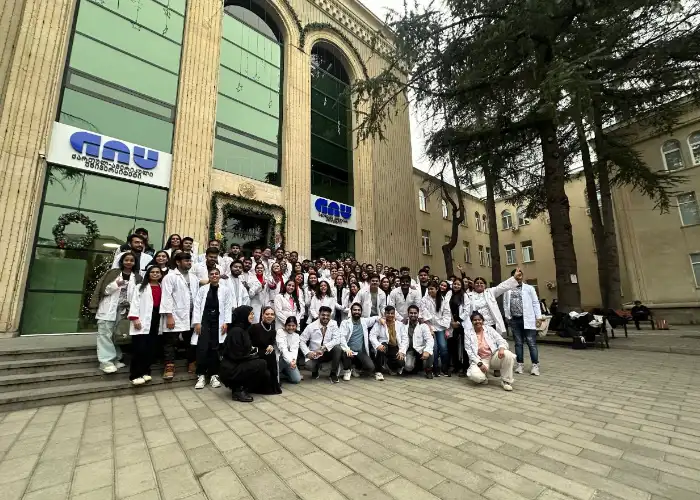

Georgian American University, established in 2001 puts lots of emphasis on quality medical education and has one of the best qualified and highly experienced faculty members.
From the very beginning, Georgian American University experienced many changes, difficult challenges, and successes.
This university runs on a mission of giving education based on advanced scientific research and innovative teaching models. The university provides equal opportunities by strengthening knowledge and medical skills.
The Georgian American University offers a 6-year MBBS program. With 6 years of dedicated and theoretical medical education, students will get a globally accepted medical degree and the opportunity to work in university-affiliated hospitals.
Providing education based on advanced scientific-research and practical-teaching models, leading research and innovative activities. By providing equal opportunities - by strengthening knowledge, skills and universal values and recognizing social responsibility, promoting the development of society and the global integration of the country through the creation, accumulation and sharing of knowledge.
In its long-term perspective, GAU takes on the responsibility of creating a tolerant, collaborative and innovative environment where students and faculty can help:
The demand in Tbilisi for a truly western University was so pronounced that despite the fact that at that time there were already two international business schools in operation, the interest in a program offering joint programs in Business and Law was substantial enough to move forward with the opening of a Business School and Law School at the Georgian American University in 2005.
In February 2005, a joint limited liability company of American and Georgian investors was formed. This dedicated group and its Board of Directors established financial and operational management standards which aligned with the strict international, ethical and educational standards necessary. This group of investors possessed a wide array of knowledge and experience such as:
From its origin, GAU has experienced many changes, challenges and successes. Where the market so demands, new programs have been introduced, further developing and improving existing programs. The drive for perfection of the educational process as well as the management of the University is instilled in each Founder, Board Member, Faculty and Staff member.
GAU has one of, if not the highest placement rates of its students and graduates in Georgia due in part to the exceptional professional and practical skills developed as well as the concentration of professional English.
In the 2011/2012 academic year, GAU added the International Relations and Diplomacy Program to its Law School, resulting in the name change to the Law and Social Sciences School. In the 2012/2013 academic year, due to the successful performances of both its Business and Law Schools and considering state priorities and market demand, GAU opened the Natural Sciences and Engineering School. In the 2013-14 academic year, GAU added the Liberal Education and Humanitarian Sciences School.
On a regular basis, GAU students are given unique opportunities through internships to work with local organizations. GAU students are also able to participate in foreign university exchange programs.
For the 2012/2013 academic year, GAU moved to a new campus location (10 Merab Aleksidze St.) which was more in line with its high university standards. The 6,000 sq.m. building contains large classrooms, a modern library/computer laboratory, a café, gym and auditoriums. This, together with expansive grounds creates a pleasant and productive academic environment.
To complete the Undergraduate MD program at Georgian American University (GAU), students must earn 360 credits.
The Undergraduate Medical Doctor program is designed to meet the challenges of training competitive and highly qualified doctors for the 21st century. During one academic year students accumulate 60 credits, i.e. 30 credits per semester, however, depending on the student's individual schedule, the number of credits per year can be either more or less than 60, but not more than 75.
The program consists of 4 phases:
The students can earn/accumulate credits only in case of successful completion of the work described in the course syllabuses, after receiving a positive assessment.
The maximum grade per academic course is 100 points.
Students with grade FX have the right to retake the final exam
Students with grade F must retake the course.
The student’s assessment takes place during the entire academic semester. Consequently, the student’s final assessment is the sum of interim assessments and final exam results.
Final examination maximum score is 40 of the total 100 points; the remaining 60 points are distributed according to interim assessments.
Only the students who have earned the minimal number of 25 points during the semester through interim assessments are allowed to take the final exam.
Students who do not have a compulsory minimum score (25) will not be admitted to the final examination. The minimum mandatory score for the final exam is 16.
The Master's thesis is assessed by the course evaluation system.
In order to determine the student's final rating and to encourage them to study well, the cumulative score, Grade Point Average* (GPA) is calculated at the end of the academic process (grade point average is also calculated at the end of each semester).
The points accumulated by the student in each course are multiplied by the number of credits for the specific course and then the total sum of these numbers is divided by the number of credits earned by the student.*
Georgian American University (GAU) Medical School Training Center was established in 2019 and serves as the simulation center for the GAU Medical School. In 2020 the training center became the International Training Center of the American Heart Association (AHA) and the Authorized Training Center of the NAEMT (National Association of the Emergency Medical Technicians).
GAU Medical School Training Center offers training and educational courses for Georgian American University (GAU) Medical School students and every interested participant according to the modern methodology with current guidelines and recommendations.
We provide local and international certifications : Basic Life Support (BLS); Advanced Cardiovascular Life Support (ACLS); Pediatric Advanced Life Support (PALS) by AHA; Pre-Hospital Trauma Life Support (PHTLS); First on the Scene (FOTS) and Tactical Emergency Casualty Care (TECC) by NAEMT.
The guiding principle of the Training Center is to provide an innovative and comfortable learning environment that follows the best standards in education and training. The experienced team of instructors with international certifications and credentials provide the high quality simulation based training insuring clinical skills development and effective team dynamics in a safe environment.
Research at the Georgian American University (GAU) Medical School is a core component of its academic mission, supporting the advancement of medical knowledge, innovation, and evidence-based practice. Integrated within the MD program and faculty activities, research at GAU promotes interdisciplinary collaboration, international engagement, and the development of critical scientific skills among students and academic staff.
The School fosters a dynamic research environment that addresses contemporary healthcare challenges through both fundamental and applied research. Its research activities are supported by dedicated institutional structures and international partnerships, ensuring alignment with global standards and active contribution to the European Research Area.

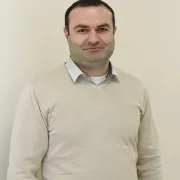
Dean of the Medical School
“I have the honor to address you on behalf of the whole Medical School.
Medicine is one of the broadest among other specialties and requires the arduous task of going through tomes of literature during studentship and professional occupation alike. However, regardless of popular opinions, it is not hard at all. It is, however, difficult to teach medicine, and especially to combine its theoretical and practical aspects. Therefore, we’ve created a program where basic and clinical medicine are fully integrated on all stages of education, as for working with large informative sources, we’ve worked a method using which we’ll be able to sail through the said material with relative ease. This program was created by doctors and is implemented by them as well, which means that at all stages of studies, you will be learning from the specialists, who are in touch with diseases on a daily and possess valuable information, necessary for correctly responding to situations with patients.
We are not limited to simply teaching you medicine. We offer you an unforgettable journey through the micro and macro worlds of the human body, using modern medical literature, multimedia means and medical simulators. We welcome you to major clinics where you’ll be able to fully experience a realistic medical environment and help solve real tasks and use techniques that will later be crucial for conducting independent procedures in your future specialty.
We aim to produce doctors, who not only know how to prescribe medicine or conduct procedures, but understand why they’re doing this, and can contribute to the future development of medicine and communicate with colleagues on an international level. Medicine is an illness of sorts, and if you have it, being a doctor will be a very pleasant experience. This is the only disease that serves the sole purpose of curing others.
Here at GAU, our medical specialists are ready to help you walk the paths they’ve already walked, hoping you’ll have more to bring to the field. For this, we only require effort from you. I’d be delighted to personally talk to every single one of you about this unique program. The medical school’s doors are always open for you.
I wish you the best of luck!”

Co-founder and President of GAU
Holds a Bachelor of Science in Mechanical Engineering from the University of Kansas and Master’s and PhD degrees in Business Administration from the University of California, Berkeley and Georgian American University, respectively. He has over four decades of international experience in regulatory, strategic, and management roles across the education, energy, infrastructure, transportation, and logistics sectors, with project work spanning more than 40 countries. From 1999 to 2003, he served as Pipeline Adviser to the Government of Georgia for the implementation of the Baku–Tbilisi–Ceyhan Pipeline and the South Caucasus Pipeline. He is the 1st Vice President of the American Chamber of Commerce in Georgia and a member of the Georgian Academy of Natural Sciences. He also serves on the Supervisory Boards of American University Kyiv (Ukraine) and the American University of Technology (Uzbekistan).

Law, Social Science and Diplomacy School

Business School
Humanities & Liberal Arts School

Business School

Law, Social Science and Diplomacy School
Informatics and Engineering School

Business School

Business School

Law, Social Science and Diplomacy School

Law, Social Science and Diplomacy School

Law, Social Science and Diplomacy School

Law, Social Science and Diplomacy School

Law, Social Science and Diplomacy School

Law, Social Science and Diplomacy School

Law, Social Science and Diplomacy School

Law, Social Science and Diplomacy School
Business School

Law, Social Science and Diplomacy School

Law, Social Science and Diplomacy School

Law, Social Science and Diplomacy School

Law, Social Science and Diplomacy School

Law, Social Science and Diplomacy School

Law, Social Science and Diplomacy School

Humanities & Liberal Arts School

Humanities & Liberal Arts School

Humanities & Liberal Arts School

Law, Social Science and Diplomacy School

Law, Social Science and Diplomacy School

Informatics and Engineering School

Business School

Business School

Medical School

Informatics and Engineering School

Informatics and Engineering School

Humanities & Liberal Arts School

Humanities & Liberal Arts School

Humanities & Liberal Arts School

Humanities & Liberal Arts School

Business School

Business School

Business School

Law, Social Science and Diplomacy School

Law, Social Science and Diplomacy School

Law, Social Science and Diplomacy School

Business School

Business School

Business School

Business School
Business School

Informatics and Engineering School

Informatics and Engineering School

Humanities & Liberal Arts School

Law, Social Science and Diplomacy School

Law, Social Science and Diplomacy School

Law, Social Science and Diplomacy School
Law, Social Science and Diplomacy School
Humanities & Liberal Arts School

Law, Social Science and Diplomacy School

Medical School

Medical School

Medical School
Medical School

Humanities & Liberal Arts School

Medical School

Law, Social Science and Diplomacy School

Business School

Medical School

Medical School

Medical School

Humanities & Liberal Arts School

Humanities & Liberal Arts School

Business School

Law, Social Science and Diplomacy School

Medical School

Medical School

Business School
Informatics and Engineering School

Business School

Humanities & Liberal Arts School

Humanities & Liberal Arts School

Humanities & Liberal Arts School

Humanities & Liberal Arts School

Law, Social Science and Diplomacy School

Informatics and Engineering School

Informatics and Engineering School

Informatics and Engineering School

Informatics and Engineering School

Informatics and Engineering School

Informatics and Engineering School

Informatics and Engineering School

Informatics and Engineering School

Informatics and Engineering School

Informatics and Engineering School

Informatics and Engineering School

Informatics and Engineering School

Informatics and Engineering School

Business School

Law, Social Science and Diplomacy School



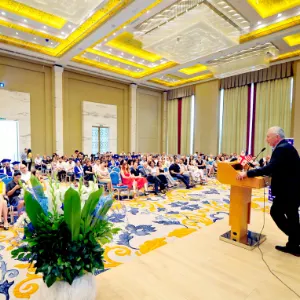





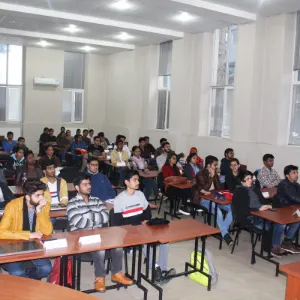


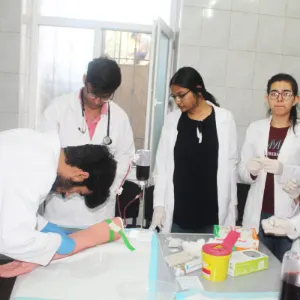
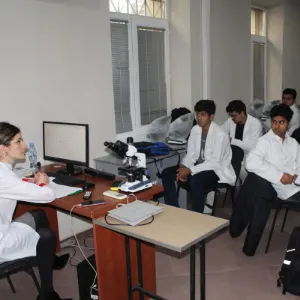

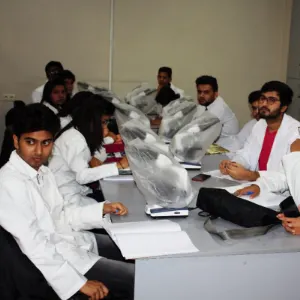

After completing MBBS from Georgian American University, students gain access to diverse global career opportunities supported by international recognition and a clinically focused medical curriculum:
Clear NEXT/FMGE exam and start medical practice in India
Pursue MD/MS specialization in recognized Indian medical colleges
Work as a doctor after completing licensing requirements in Georgia
Clear USMLE, PLAB, or other licensing exams for global practice
Explore careers in hospitals, clinics, and healthcare organizations worldwide
Build a career in medical research, teaching, and higher education



Yes, Georgian American University is recognized by major international medical bodies such as WHO (WDOMS), NMC (India), FAIMER, and ECFMG. This ensures that the MD degree (equivalent to MBBS) is globally accepted and allows students to appear for licensing exams like NEXT, USMLE, and PLAB.
The MD program at Georgian American University has a duration of 6 years, including theoretical education and clinical training. The curriculum follows European standards (ECTS system) and provides strong practical exposure through affiliated hospitals.
Yes, the MD program is offered in English medium, specifically designed for international students. This helps Indian students study comfortably and prepare effectively for global medical licensing exams.
Students must have completed 10+2 with Physics, Chemistry, and Biology with at least 50% marks (40% for reserved categories). Indian students must qualify NEET, as per NMC guidelines, to pursue MBBS abroad and practice in India.
Yes, Georgian American University provides modern hostel facilities with furnished rooms, Wi-Fi, security, and essential amenities. Indian food is available in the mess or nearby restaurants, ensuring a comfortable living experience for international students.
Get free counseling from our experts and take the first step towards becoming a doctor.
Fill the form below and our expert will call you within 24 hours
Get detailed information about MBBS abroad programs